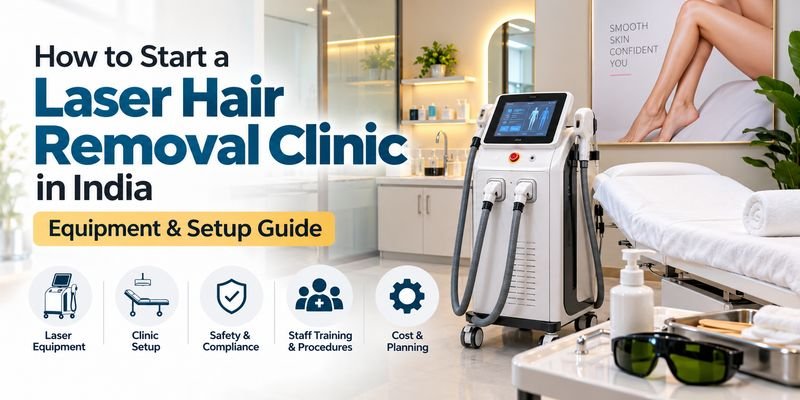
How to Start a Laser Hair Removal Clinic in India: Equipment & Setup Guide
Starting a laser hair removal clinic in India requires more than purchasing a laser machine. You need suitable treatment-room infrastructure, appropriate safety equipment, trained professionals, patient-screening procedures, reliable after-sales support and a realistic business budget.
For a new clinic, one of the most important decisions is choosing the right laser hair removal clinic equipment for your intended services, patient volume and budget. This guide explains the main equipment requirements, clinic setup process, machine selection criteria and practical steps to consider before investing.
What Do You Need to Start a Laser Hair Removal Clinic in India?
To establish a laser hair removal service, you generally need a suitable clinical premises, a professional laser system, wavelength-appropriate protective eyewear, treatment furniture, hygiene supplies, trained personnel and documented patient-care procedures.
Your exact requirements depend on the clinic model, the procedures offered, the equipment's intended use and applicable local and national requirements.
Before purchasing equipment, define your business model. Are you opening a dedicated laser hair removal centre, adding treatments to an existing dermatology clinic or expanding an aesthetic clinic?
The answer will influence the equipment configuration, room requirements, staffing, budget and expected patient volume.
1. Essential Laser Hair Removal Clinic Equipment
Professional laser hair removal machine
The laser system is usually the main equipment investment for a clinic offering laser hair reduction.
Professional diode laser systems are one option to consider. When comparing machines, examine the actual technical specifications, intended use, operating requirements, safety features and service arrangements rather than choosing solely by advertised power.
Important specifications include:
- Laser type and wavelength configuration.
- Available spot sizes and pulse-duration settings.
- Fluence and repetition-rate ranges.
- Handpiece design and expected service life.
- Cooling system and temperature-control arrangements.
- Electrical requirements and operating environment.
- User interface, maintenance requirements and service availability.
A machine's advertised wattage alone does not establish clinical effectiveness or suitability for every patient. Ask the supplier to explain the specifications in the context of the intended clinical application.
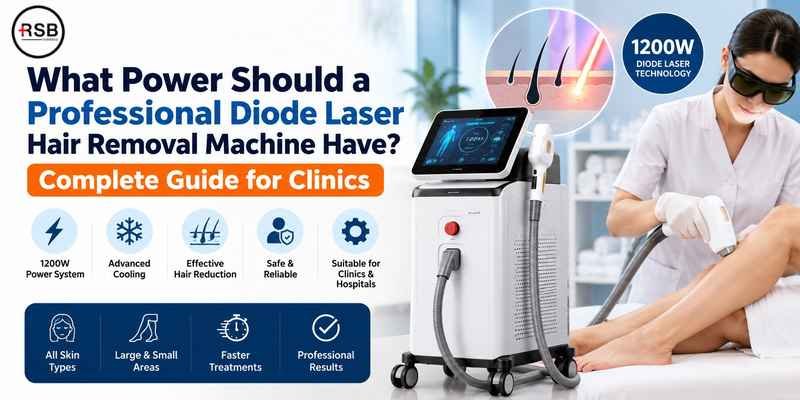
For example, RSB Overseas Medical lists a 1200W Diode Laser Hair Removal Machine with a standard 808 nm wavelength and optional multi-wavelength configuration. Review the current product specifications and request documentation before deciding whether it suits your clinic.
Protective eyewear and laser safety equipment
Laser safety equipment is essential. Appropriate protective eyewear must be selected for the wavelengths and optical characteristics of the device being used.
Your safety checklist should include:
- Protective eyewear for the treating professional and everyone else who must remain in the controlled treatment area.
- Appropriate patient eye protection.
- Access controls and warning signage where required.
- An emergency stop or shutdown procedure.
- Clear operating protocols and equipment instructions.
- A process for inspecting, cleaning and maintaining protective equipment.
Ordinary sunglasses are not a substitute for wavelength-appropriate laser safety eyewear. Follow the machine manufacturer's instructions and the applicable laser safety requirements.
Treatment bed or adjustable chair
The patient should be positioned comfortably and safely during treatment.
Choose a treatment bed or adjustable chair that supports the procedures offered, permits appropriate access to the treatment area and can be cleaned between patients.
Consider stability, adjustment range, operator ergonomics and ease of maintenance before purchasing furniture.
Cooling and patient-comfort accessories
Cooling may be integrated into the laser handpiece or supplied through another compatible system, depending on the equipment.
Ask the supplier to explain how the cooling system operates, how it is maintained and what precautions are necessary. Do not assume that a particular cooling specification eliminates the risk of burns or other adverse effects.
Hygiene and patient-preparation supplies
Prepare a dedicated area for patient preparation and routine hygiene procedures.
Depending on your clinical protocols, this may include suitable cleaning products, disposable supplies, protective materials and equipment for cleaning and disinfecting reusable items according to their instructions.
Keep clean supplies separate from used items and establish a documented room-cleaning procedure.
Consultation and record-keeping tools
Patient assessment and documentation are important parts of a professional laser service.
Your clinic may need systems for recording medical history, skin and hair characteristics, treatment settings, consent, test-patch findings where appropriate, photographs with consent, follow-up and adverse events.
Use secure records and follow applicable privacy and record-retention requirements.
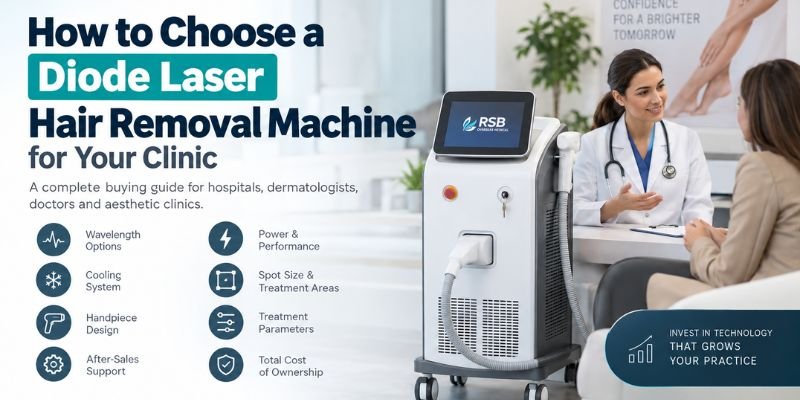
2. How to Choose the Right Diode Laser Hair Removal Machine
The best equipment choice depends on your intended clinical use, patient population, budget and available service support.
Compare wavelength configurations
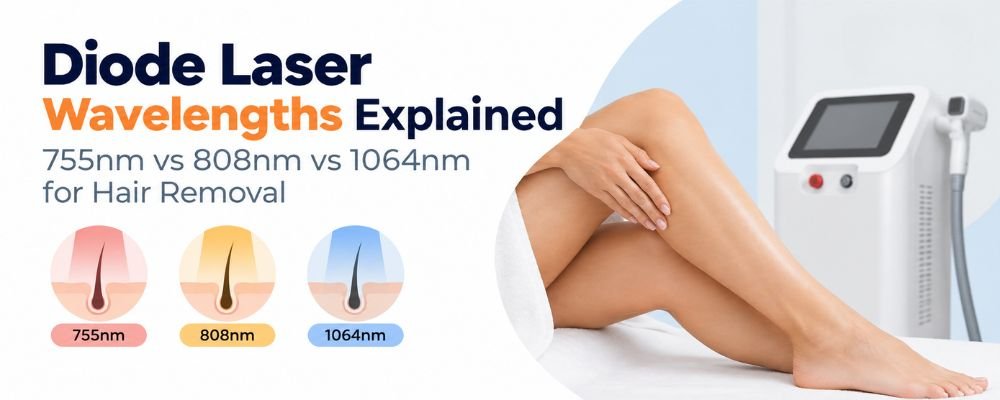
Different wavelengths interact differently with skin and hair. Their suitability depends on factors such as skin pigmentation, hair characteristics, treatment area and the selected clinical parameters.
An 808 nm diode system is one commonly marketed option. Multi-wavelength systems may offer additional configuration choices, but the presence of more wavelengths does not automatically make a machine better for every clinic.
Ask the supplier for the technical documentation and intended-use information for each configuration.
Check spot size and treatment parameters
Spot size, fluence, pulse duration and repetition rate influence how a system delivers energy.
Compare the available ranges and ask how the machine is intended to be used for the procedures your clinic plans to offer. Have a qualified practitioner assess the relevance of these specifications.
Do not select equipment based on a single headline number.
Evaluate the cooling system
Patient comfort and epidermal protection are important considerations during laser hair reduction.
Ask whether the system uses contact cooling, water cooling, air cooling or a combination. Also confirm maintenance requirements, consumables, operating limitations and how the cooling system's performance is checked.
Cooling technology is one part of safe operation, not a guarantee against injury.
Verify training, warranty and after-sales service
Before purchasing, ask the supplier:
- Is installation included?
- What operator training is provided?
- Is hands-on training available for the intended users?
- What does the warranty cover, and for how long?
- Are handpieces and other spare parts available?
- What is the process for technical support and repairs?
- Are maintenance instructions and operating manuals provided?
- What documents are available for the machine's intended use and applicable regulatory status?
A lower purchase price may not represent better value if maintenance, training or service support is inadequate.
3. Plan Your Laser Treatment Room
A suitable treatment room should support safe equipment operation, patient privacy, hygiene and an efficient clinical workflow.
Space and layout
Plan enough room for the equipment, treatment bed, operator movement, patient access and cleaning.
Keep the treatment area organised and minimise unnecessary reflective objects or surfaces where they could create a laser hazard. Follow the equipment manufacturer's room and operating requirements.
Electrical supply and environment
Check the machine's specified voltage, frequency, power requirements, ventilation and environmental conditions before installation.
Arrange appropriate electrical infrastructure and protection through a qualified professional. Where continuity of operation is important, discuss backup power requirements with the supplier and a qualified electrician.
Access and safety controls
Define who can enter the room during treatment and how the treatment area is secured.
Place relevant warning signs, operating instructions and emergency procedures where staff can access them. Ensure that everyone involved understands the safety protocol before the system is used.
Hygiene and emergency readiness
Establish procedures for cleaning the room and equipment between patients. Prepare a response plan for burns, unexpected reactions, accidental eye exposure and other relevant emergencies.
The exact emergency equipment and clinical arrangements should be determined by the procedures offered, qualified clinical leadership and applicable requirements.
4. Staff Training, Patient Assessment and Laser Safety
A professional laser hair removal service requires appropriate clinical oversight and competent operation.
Indian dermatology guidance emphasises knowledge of skin anatomy and laser physics, hands-on training, appropriate eye protection and individualised treatment parameters.
Before treatment, the responsible practitioner should assess whether the procedure is appropriate for the patient and explain its expected benefits, limitations and potential adverse effects.
Important steps include:
- Obtain a relevant medical history and assess skin and hair characteristics.
- Explain the procedure, expected course of treatment and potential risks.
- Obtain informed consent and document the discussion.
- Follow the device instructions and established clinical protocols.
- Use appropriate eye protection and room-safety procedures.
- Record the settings used and the patient's response.
- Provide suitable aftercare advice and follow-up arrangements.
Laser hair reduction may cause burns, pigment changes, scarring or eye injury if performed incorrectly. Patient selection, training and safe operating practices are therefore essential.
Do not assume that a short supplier demonstration alone is sufficient clinical training. Confirm the qualifications and supervision required for the procedures you intend to provide.
5. Laser Hair Removal Clinic Setup Cost in India
The cost of opening a clinic depends on the machine configuration, premises, fit-out, staffing, services offered and local operating expenses.
There is no single budget that applies to every clinic. Build a cost estimate using actual quotations rather than relying on a machine price alone.
| Budget category | What to include |
|---|---|
| Laser equipment | Machine, handpiece, standard accessories and selected configuration |
| Room setup | Furniture, electrical work, room preparation and safety signage |
| Safety supplies | Appropriate protective eyewear and other required safety equipment |
| Installation and training | Installation charges, training and initial setup support |
| Staffing | Salaries, professional fees and training costs |
| Business premises | Rent, deposit, utilities and maintenance |
| Clinic operations | Hygiene supplies, software, records and administrative costs |
| Maintenance | Warranty exclusions, servicing, consumables and potential repairs |
| Working capital | Funds for initial operating expenses before revenue stabilises |
Example of an equipment-budgeting approach
Start by obtaining quotations for two or three machines that meet your requirements. Compare the purchase price, included accessories, training, warranty, taxes, installation and maintenance arrangements.
Then calculate the remaining setup costs separately. This prevents you from committing the entire budget to the machine while overlooking essential room, staffing and operating expenses.
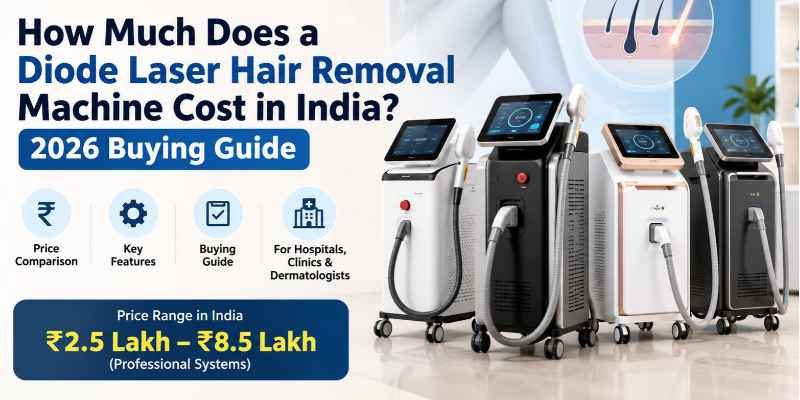
For current model-specific pricing, read our Diode Laser Hair Removal Machine Price in India guide.
Treat online prices as indicative until the supplier confirms the current configuration and total quotation.
6. Licences, Compliance and Supplier Verification in India
Before opening your clinic, verify the requirements applicable to your premises, clinical services, practitioners and equipment.
India's medical-device framework includes the Medical Devices Rules, 2017, under the Drugs and Cosmetics Act. The specific obligations depend on the device's classification, intended use and the activities involved.
Do not assume that every aesthetic device has the same regulatory status or that a supplier's statement automatically establishes compliance.
Before purchasing, request relevant product documentation and verify applicable requirements with the appropriate regulatory authority or a qualified compliance professional.
Also check the local requirements that apply to your establishment, including business registration, premises, professional qualifications, applicable clinical-establishment rules and any relevant municipal or fire-safety requirements.
Confirm that the personnel performing or supervising treatments meet the requirements applicable to the procedures offered. Where professional or regulatory obligations are unclear, obtain qualified advice before starting clinical services.
7. Common Mistakes When Setting Up a Laser Hair Removal Clinic
Choosing a machine only because of its wattage
Power ratings do not provide a complete picture of clinical performance. Evaluate the entire technical configuration, intended use, safety features and service arrangements.
Ignoring training and safety
A machine should not be put into clinical use without appropriate training, protective eyewear, operating procedures and patient-assessment protocols.
Underestimating the total setup budget
The purchase price is only one component. Include room preparation, staffing, training, maintenance and working capital.
Failing to verify supplier support
Confirm warranty terms, service response arrangements, spare-part availability and the scope of training before making payment.
Making unrealistic treatment promises
Results vary according to individual characteristics and treatment factors. Avoid guaranteeing permanent hair removal or identical outcomes for every patient.
Skipping patient documentation
Proper consultation, consent, treatment records and follow-up help support continuity of care and responsible clinical practice.
Frequently Asked Questions
What equipment is needed for a laser hair removal clinic?
Typical requirements include a professional laser system, suitable protective eyewear, a treatment bed or chair, hygiene supplies, patient-record tools and appropriate room-safety equipment. The exact list depends on the procedures and device.
Which laser machine is suitable for a new clinic?
The appropriate machine depends on the intended clinical use, patient population, available budget, technical specifications, training and after-sales support. Compare the complete system rather than choosing by wattage or price alone.
How much does it cost to start a laser hair removal clinic in India?
The total cost varies with the machine, premises, fit-out, staffing, safety equipment and operating budget. Obtain current quotations and prepare a separate estimate for equipment and ongoing expenses before committing funds.
Is a diode laser suitable for every skin type?
No single configuration should be assumed suitable for every patient. Suitability depends on skin and hair characteristics, the machine's specifications and the clinical protocol used by a qualified practitioner.
What safety equipment is required?
Appropriate wavelength-specific protective eyewear, access and warning controls, emergency procedures and equipment-specific safety measures are important. Follow the manufacturer's instructions and applicable safety requirements.
What should I check before buying a diode laser machine?
Review the intended use, wavelength configuration, treatment parameters, cooling system, warranty, training, service support, spare parts and applicable product documentation.
Is training necessary before operating a laser hair removal machine?
Yes. Appropriate training and knowledge of laser safety and skin interaction are essential. The level of qualification, supervision and permitted practice must also comply with applicable professional and regulatory requirements.
Does RSB Overseas Medical offer diode laser equipment?
RSB Overseas Medical lists professional diode laser hair removal systems, including a 1200W diode laser model and a HOPE triple-wavelength system. Contact the company to confirm current specifications, price, training, warranty and service arrangements.
Choose Laser Hair Removal Equipment for Your Clinic
Planning a laser hair removal clinic starts with selecting equipment that suits your intended services and establishing a safe, well-organised clinical environment.
RSB Overseas Medical supplies aesthetic and laser equipment for professional settings. Explore our 1200W Diode Laser Hair Removal Machine or review the HOPE Triple Wavelength Diode Laser to compare available configurations.
Contact RSB Overseas Medical to request current pricing, product documentation and details about installation, training, warranty and after-sales support. Share your clinic type, intended applications and budget to help the team identify suitable options.
Choose equipment based on documented specifications, appropriate clinical use, safety and long-term service support—not on price or power ratings alone.