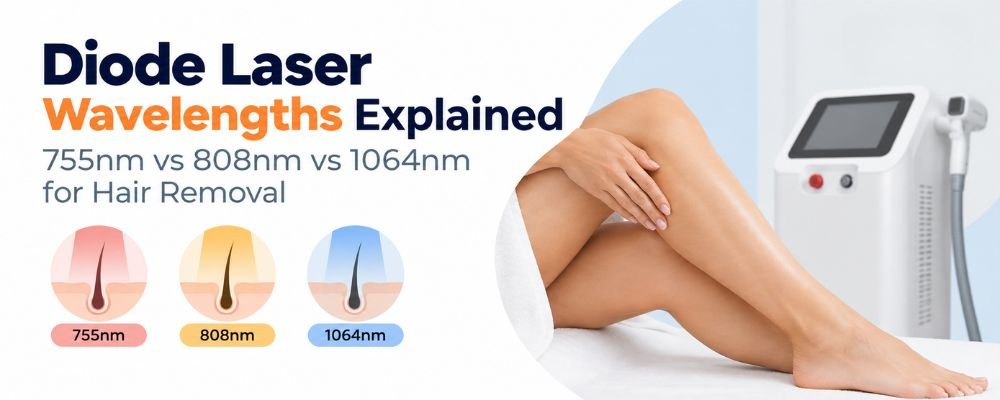
Diode Laser Wavelengths Explained: 755nm vs 808nm vs 1064nm for Hair Removal
Choosing a professional hair removal laser machine involves more than comparing power, price, or the number of treatment modes. One of the most important technical considerations is laser wavelength. For professional hair removal, wavelengths such as 755nm, 808nm, and 1064nm are commonly discussed because they interact differently with melanin and penetrate to different depths in tissue.
But which wavelength is best for hair removal?
The answer depends on several factors, including skin type, hair characteristics, treatment area, clinical protocol, and the laser technology used by the machine. This blog explains the differences between 755nm vs 808nm vs 1064nm, how wavelength affects hair-removal treatments, and what clinics should consider when selecting a professional diode laser system.
What Is a Laser Wavelength?
Laser wavelength is measured in nanometers (nm) and describes the specific wavelength of light emitted by a laser. Different wavelengths interact differently with biological tissues because their absorption and penetration characteristics vary. In laser hair removal, the objective is to deliver controlled optical energy to the hair follicle while minimizing unnecessary damage to the surrounding skin.
The choice of wavelength therefore influences:
- Melanin absorption
- Penetration depth
- Hair-follicle targeting
- Suitability for different skin types
- Treatment parameters
- Clinical versatility
This is why wavelength should be considered alongside fluence, pulse duration, spot size, cooling system, repetition rate, and treatment protocol.
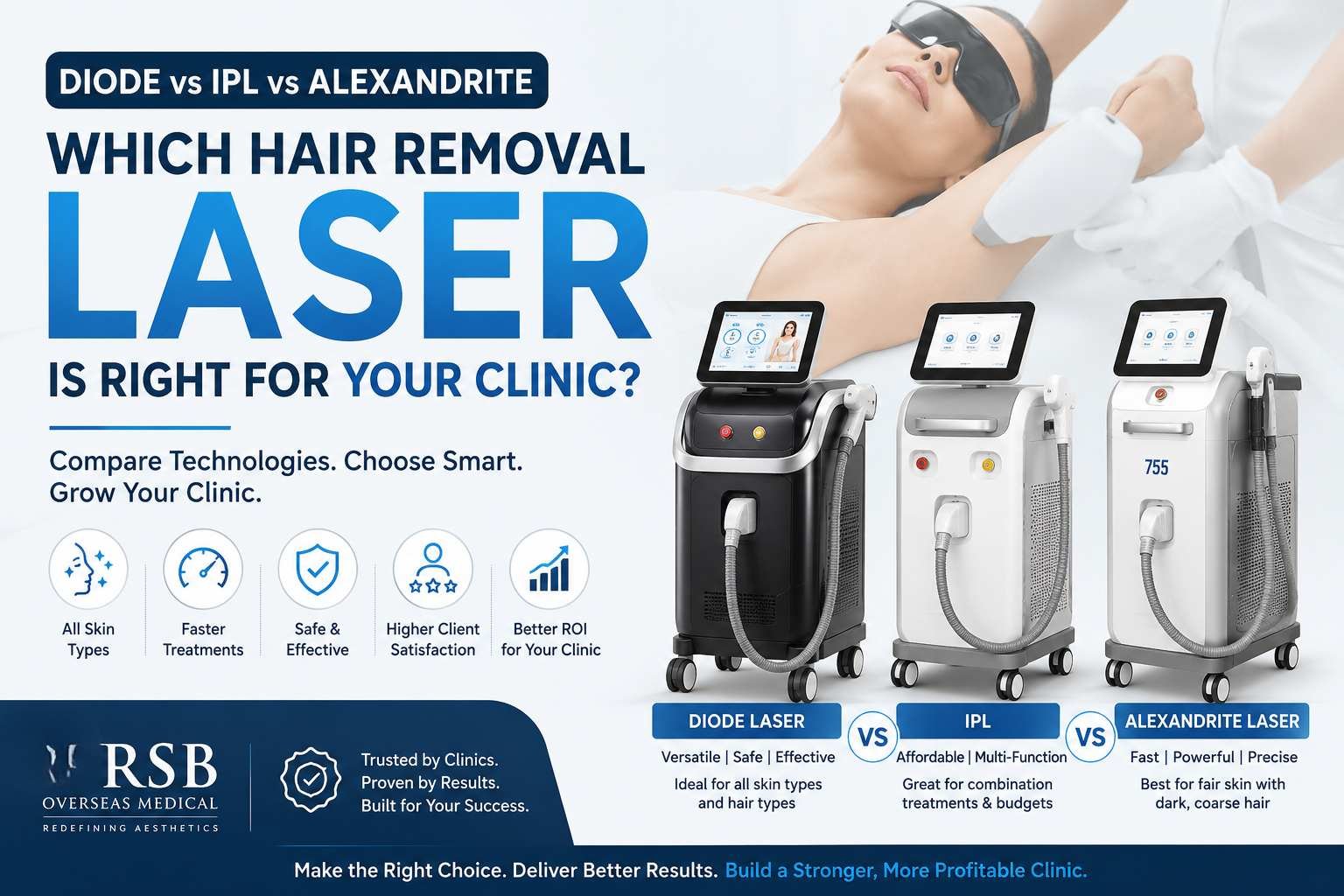
755nm vs 808nm vs 1064nm: Quick Comparison
| Wavelength | Common Technology | General Characteristics | Typical Considerations |
|---|---|---|---|
| 755nm | Alexandrite / some multi-wavelength systems | Higher melanin absorption | Often associated with lighter skin and pigmented hair |
| 808nm | Diode laser | Balanced absorption and penetration | Widely used for professional hair removal |
| 1064nm | Nd:YAG | Lower melanin absorption, deeper penetration | Often useful when treating darker skin types with appropriate protocols |
755nm for Hair Removal:
The 755nm wavelength is strongly absorbed by melanin compared with longer wavelengths. This characteristic can make 755nm systems effective for targeting melanin within pigmented hair.
Potential advantages
- Strong interaction with melanin
- Useful for certain lighter skin types
- Can be effective for dark, coarse hair
- Commonly associated with alexandrite laser technology
Important consideration: Because melanin in the epidermis can also absorb laser energy, treatment parameters must be selected carefully, particularly when treating patients with higher levels of epidermal pigmentation. For this reason, 755nm is not simply a "best wavelength" for every patient.
808nm for Hair Removal:
808nm is one of the most widely recognized wavelengths in professional diode laser hair-removal systems. It provides a balance between melanin absorption and penetration, making it suitable for many common hair-removal applications when the device and treatment parameters are appropriate.
Why is 808nm popular?
Professional diode laser systems using approximately 808nm can provide:
- Effective follicular targeting
- Useful penetration into the dermis
- Compatibility with a wide range of treatment areas
- Flexible treatment protocols
- High-speed treatment capabilities on suitable systems
The 808nm diode laser is therefore frequently used in professional clinics and aesthetic practices. However, wavelength alone does not determine the effectiveness of a machine. The diode's optical output, pulse characteristics, cooling technology, handpiece design and overall engineering also matter.
1064nm for Hair Removal:
The 1064nm wavelength is commonly associated with Nd:YAG laser technology. Compared with shorter wavelengths, 1064nm has lower absorption by melanin and generally penetrates deeper into tissue. This characteristic can be advantageous when treating patients with more heavily pigmented skin, provided that the device and treatment protocol are appropriate.
Potential advantages
- Deeper optical penetration
- Lower melanin absorption than shorter wavelengths
- Often considered for darker skin types
- Can be useful for deeper hair follicles
Because the interaction with melanin is lower, treatment may require different energy and pulse parameters compared with shorter wavelengths.
755nm vs 808nm vs 1064nm: What's the Difference?
The fundamental difference is how each wavelength interacts with melanin and tissue.
755nm: Generally has stronger melanin absorption. Its commanly used for lighter skin with darker hair, when clinically appropriate.
808nm: Provides a commonly used balance between absorption and penetration. Its commanly used for versatile professional diode laser hair-removal applications.
1064nm: Has lower melanin absorption and deeper penetration. Its commanly used for darker skin types and deeper follicles, with suitable protocols.
Rather than asking:
"Which wavelength is the best?"
clinics should ask: “Which wavelength and laser platform are appropriate for the skin types, hair types and treatment protocols we intend to offer?”
Which Laser Wavelength Is Best for Hair Removal?
There is no single wavelength that is universally best for every patient. The appropriate wavelength depends on:
- Fitzpatrick skin type
- Hair color
- Hair thickness
- Hair depth
- Treatment area
- Epidermal pigmentation
- Laser technology
- Cooling capability
- Treatment parameters
- Practitioner experience
For example, a wavelength that provides strong melanin absorption may be useful for some lighter skin types but requires greater attention to epidermal melanin when treating darker skin. Longer wavelengths can provide deeper penetration and lower melanin absorption, which can be useful in different clinical situations.
Why Multi-Wavelength Diode Lasers Are Popular?
Modern professional diode laser systems may combine multiple wavelengths in a single platform. A multi-wavelength system can potentially provide greater treatment flexibility because different wavelengths can address different combinations of skin pigmentation, hair thickness and follicle depth.
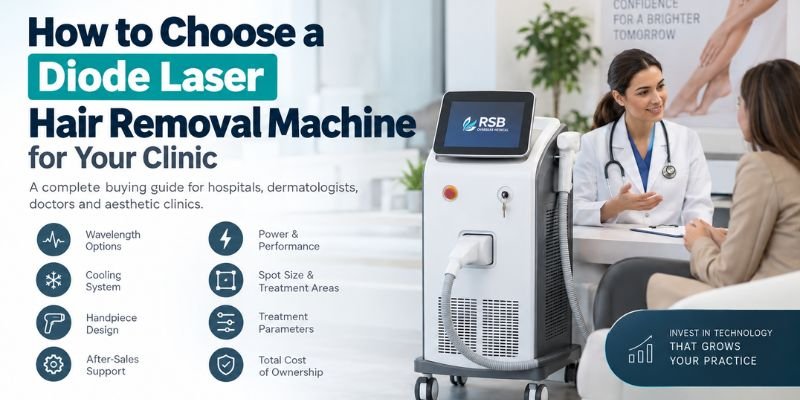
For clinics serving a diverse patient population, this flexibility can be an important purchasing consideration. When evaluating a multi-wavelength hair-removal machine, don't look only at the wavelength numbers.
Also examine:
- Actual output power
- Number of laser bars
- Spot size
- Pulse duration
- Fluence range
- Repetition rate
- Cooling technology
- Handpiece ergonomics
- Display and controls
- Warranty
- Technical support
- Spare-parts availability
- Service network
Is 808nm Better Than 755nm?
Not necessarily.
808nm and 755nm serve different optical characteristics, and suitability depends on the patient and treatment protocol.
755nm generally has greater melanin absorption, while 808nm provides a commonly used balance between melanin interaction and tissue penetration. A clinic should therefore avoid selecting a machine simply because one wavelength sounds technically superior. Instead, evaluate the complete laser platform and whether it matches the clinic's patient population.
Is 1064nm Better for Darker Skin?
1064nm is commonly considered for darker skin types because its melanin absorption is lower than that of shorter wavelengths. That can reduce the relative interaction with epidermal melanin. However, lower melanin absorption does not mean risk-free treatment.
Appropriate:
- Patient assessment
- Test spots
- Treatment parameters
- Cooling
- Eye protection
- Device-specific protocols
- Practitioner training
remain important. Clinics should follow the manufacturer's instructions and applicable professional standards.
Wavelength Is Only One Part of a Hair Removal Laser?
One common purchasing mistake is comparing machines exclusively by wavelength. For example:
Machine A: 755nm
Machine B: 808nm
Machine C: 1064nm
This comparison is incomplete. A professional laser system should be evaluated as a complete platform.
Important specifications include:
- Power : Higher advertised wattage does not automatically mean better clinical results. The relevant question is how effectively and consistently the system delivers usable optical energy.
- Cooling : Effective skin cooling is an important component of patient comfort and epidermal protection.
- Spot Size: Larger spot sizes can improve treatment speed over larger areas, depending on the application.
- Pulse Width: Pulse duration influences how energy is delivered and must be matched to the treatment protocol.
- Fluence: Fluence describes energy delivered per unit area and is an important treatment parameter.
- Repetition Rate: Higher repetition rates can help improve treatment speed when appropriate for the treatment protocol.
- Handpiece: A comfortable and reliable handpiece can significantly affect operator experience during high-volume treatments.
How Skin Type Influences Wavelength Selection
Skin pigmentation is one of the most important considerations when selecting laser parameters. The Fitzpatrick skin-type classification is commonly used as one method of describing skin response to ultraviolet exposure.
In simplified terms:
- Lower skin pigmentation: shorter wavelengths may be considered depending on hair and treatment characteristics.
- Intermediate skin pigmentation: 808nm diode systems are commonly used with appropriate parameters.
- Higher skin pigmentation: longer wavelengths such as 1064nm may be considered because of their lower melanin absorption.
This should not be interpreted as a fixed wavelength-to-skin-type prescription.
RSB Overseas Medical Hair Removal Laser Machines
If you are researching a professional hair removal laser machine for your clinic, RSB Overseas Medical provides laser and aesthetic equipment for professional applications. The RSB Overseas Medical hair-removal category includes options across diode and other hair-removal technologies.
👉 Explore: Hair Removal Laser Machines for Clinics – Diode, IPL & More
For clinics specifically evaluating high-power diode systems, you can also internally link relevant product pages such as your 1200W Diode Laser Hair Removal Machine and other applicable RSB Overseas Medical products.
Frequently Asked Questions
Question: What is the best wavelength for laser hair removal?
Answer: There is no universally best wavelength. 755nm, 808nm and 1064nm have different optical characteristics, and selection depends on skin type, hair characteristics, treatment area and the specific laser platform.
Question: Is 808nm good for laser hair removal?
Answer: Yes. 808nm is a widely used wavelength in professional diode laser hair-removal systems and provides a commonly used balance between melanin absorption and penetration.
Question: What is 755nm used for?
Answer: 755nm has relatively strong melanin absorption and is commonly associated with alexandrite laser technology and certain hair-removal applications.
Question: What is 1064nm used for?
Answer: 1064nm is associated with Nd:YAG technology and provides deeper penetration with lower melanin absorption than shorter wavelengths. It is commonly considered for darker skin types when appropriate clinical protocols are followed.
Question: Is 808nm safe for dark skin?
Answer: 808nm can be used for various skin types with appropriate equipment and parameters, but darker skin requires careful consideration of epidermal melanin, cooling and treatment settings.
Question: Can one laser machine have 755nm, 808nm and 1064nm?
Answer: Yes. Some professional multi-wavelength platforms combine these wavelengths to provide greater treatment flexibility.
Question: Does higher wattage mean better hair removal?
Answer: Not necessarily. Advertised wattage is only one specification. Actual performance also depends on optical output, fluence, pulse characteristics, cooling, spot size, treatment protocol and device engineering.