Slimming Machine vs Traditional Weight-Loss Treatments: What Clinics Should Know
The demand for aesthetic treatments and non-invasive body-contouring services has encouraged many dermatology clinics, aesthetic centres and wellness facilities to explore professional slimming equipment. However, choosing the right equipment requires an understanding of how body-contouring technologies differ from traditional weight-management treatments.
For doctors, clinic owners and healthcare professionals, the decision is not simply about purchasing a slimming machine. It involves identifying the services a clinic intends to provide, understanding the technology behind the equipment, evaluating its intended use and safety requirements, and selecting a suitable medical equipment supplier.
Traditional weight-management approaches focus on overall health, nutrition, physical activity and, when clinically appropriate, medical treatment. Professional body-contouring equipment, on the other hand, is designed for specific aesthetic or body-shaping objectives, depending on the technology and device.
Understanding these differences can help clinics make informed equipment purchasing decisions and establish appropriate expectations for patients.
What Is a Professional Slimming Machine?
A professional slimming machine is a broad term used to describe equipment marketed for body contouring, body shaping, muscle stimulation or other aesthetic applications. Its actual function depends on the technology incorporated into the device.
Different machines may use technologies such as radiofrequency (RF), cryolipolysis, ultrasound cavitation or electrical muscle stimulation (EMS). These technologies are not interchangeable, and their intended uses, limitations and safety considerations vary.
Clinics should evaluate the specific model rather than relying solely on the general term “slimming machine.”
Before purchasing equipment, healthcare professionals should establish:
- The manufacturer's intended use and permitted treatment indications.
- The technology used by the machine.
- The available applicators, handpieces and treatment configurations.
- The manufacturer's operating instructions and contraindications.
- The training, maintenance and technical support available.
- The applicable regulatory documentation and safety requirements.
A suitable device should align with the clinic's services, staff qualifications, patient assessment procedures and operational requirements.
What Are Traditional Weight-Loss Treatments?
Traditional weight-management approaches address excess body weight and related health considerations. Depending on an individual's needs, these approaches may include lifestyle interventions, clinical assessment, medication or bariatric procedures.
1. Nutrition and lifestyle management
Nutrition planning, physical activity, behavioural support and appropriate follow-up form important parts of long-term weight management. These approaches aim to support sustainable health and weight-related goals.
2. Clinician-led medical weight management
Some patients may benefit from structured medical care, including prescription medication when indicated. Treatment decisions depend on clinical assessment, medical history, contraindications and applicable guidelines.
3. Bariatric procedures
For appropriately selected patients with obesity, bariatric procedures may be considered as part of specialist-led treatment. These interventions are fundamentally different from aesthetic body-contouring procedures.
The appropriate approach depends on the patient's clinical needs. A cosmetic body-contouring device should not be presented as a replacement for evidence-based obesity treatment.
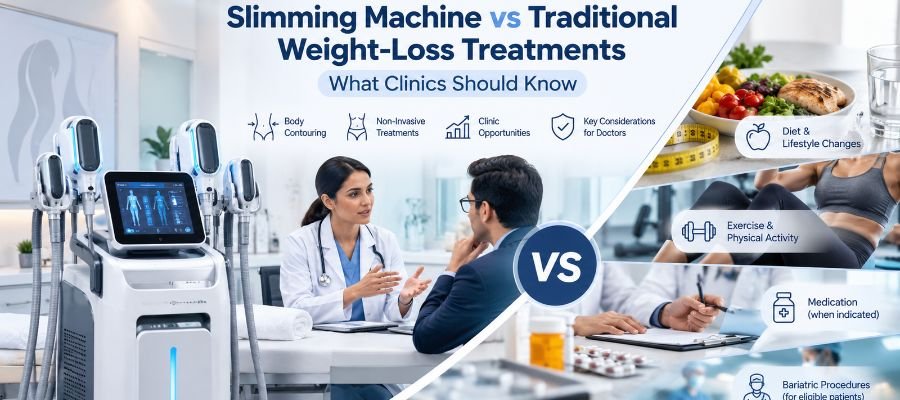
Slimming Machine vs Traditional Weight-Loss Treatments: Key Differences
| Comparison factor | Professional body-contouring equipment | Traditional weight-management treatments |
|---|---|---|
| Primary objective | Specific aesthetic or body-shaping goals, depending on the device | Overall weight management and related health objectives |
| Treatment approach | Device-based procedure or treatment | Lifestyle intervention, medical care or surgery, as appropriate |
| Technology or method | May include RF, cryolipolysis, ultrasound cavitation or EMS | Nutrition, physical activity, behavioural support, medication or bariatric procedures |
| Patient suitability | Depends on device-specific indications and patient assessment | Depends on clinical needs, health status and treatment eligibility |
| Treatment planning | Requires appropriate device selection, protocols and operator training | Requires an individualised management plan |
| Expected outcomes | Vary by technology, device, patient and treatment protocol | Vary by intervention, patient characteristics and adherence |
| Role in a clinic | May support an appropriate aesthetic or body-contouring service | Supports weight management or medical treatment within the provider's scope of practice |
Important: These approaches serve different purposes. A body-contouring procedure may address a specific aesthetic concern, but it should not be assumed to produce substantial overall weight loss or the health benefits associated with weight reduction.
Types of Slimming Machines Used in Aesthetic Clinics
When evaluating professional slimming equipment, clinics should understand the main technologies available and verify the intended use of each specific model.
1. Cryolipolysis Machines
Cryolipolysis equipment uses controlled cooling as part of a non-invasive body-contouring procedure intended to affect selected areas of subcutaneous fat.
For clinics considering this technology, important purchasing considerations include the cooling system, applicator design, temperature monitoring, device-specific safety features, treatment indications and manufacturer documentation.
Clinics should also understand the potential risks and limitations. For example, the US Food and Drug Administration has identified paradoxical adipose hyperplasia as a possible complication of cryolipolysis.
Explore the Cryolipolysis Machine available from RSB Overseas Medical.
2. Radiofrequency (RF) Body-Contouring Equipment
Radiofrequency technology delivers energy into tissue to produce controlled heating. Depending on the device and its intended use, RF equipment may be used for certain aesthetic applications, including skin appearance or body-contouring procedures.
When evaluating an RF machine, clinics should review its energy delivery system, applicators, treatment controls, intended indications and safety instructions.
It is important not to assume that every RF device has the same function or produces the same results.
3. Ultrasound Cavitation Equipment
Some aesthetic devices use ultrasound technology for specific body-contouring applications. Their mechanisms, operating parameters and intended treatment areas vary by model.
Clinic owners should verify the manufacturer's instructions, the evidence supporting the intended use, the required operator training and the device's contraindications before adding this technology to their service offering.
4. EMS and Muscle-Stimulation Equipment
Electrical muscle stimulation equipment delivers electrical impulses to stimulate muscle contractions. Depending on the specific technology, device and intended use, it may be marketed for muscle stimulation or body-sculpting applications.
Clinics should distinguish between devices intended for muscle stimulation and those designed for other aesthetic procedures. They should also review the manufacturer's guidance on patient selection, contraindications and treatment protocols.
Explore the EMS Sculpture Slimming Machine from RSB Overseas Medical for product-specific information.
When Should a Clinic Consider Investing in a Slimming Machine?
Investing in professional body-contouring equipment may be worth evaluating when a clinic has a clear service objective, suitable patient demand and the clinical expertise needed to operate the device responsibly.
Dermatology and aesthetic clinics
Clinics offering aesthetic procedures may evaluate body-contouring equipment as a potential addition to their existing services. Technology selection should reflect the clinic's treatment scope, practitioner qualifications and intended patient population.
Cosmetic and body-contouring centres
Dedicated aesthetic centres may assess equipment based on the specific procedures they plan to provide, the treatment areas addressed by the device and the manufacturer's supported indications.
Multispecialty hospitals and healthcare facilities
Hospitals considering aesthetic equipment should assess the proposed clinical service, procurement requirements, staff training, maintenance arrangements and applicable regulatory obligations.
Wellness and body-management facilities
Facilities providing wellness services should carefully distinguish aesthetic body-contouring services from medical weight management. Equipment selection and marketing should remain consistent with the facility's scope of practice and the device's intended use.
Before making a purchase, clinics should estimate equipment utilisation, staffing requirements, consumables, maintenance costs and potential demand. An equipment purchase should be based on a realistic operational assessment rather than an assumption of guaranteed revenue.
What Slimming Machines Cannot Replace
Professional body-contouring equipment has specific limitations that clinics should communicate clearly.
Slimming machines are not substitutes for:
- A balanced nutrition and physical activity programme.
- Clinical assessment and management of obesity.
- Prescription medication when medically indicated.
- Bariatric treatment when appropriate for the patient.
- Individualised advice from a qualified healthcare professional.
The US FDA explains that non-invasive body-contouring procedures do not treat obesity and do not provide the established health benefits associated with weight loss.
Results can vary depending on the device, the treatment area, patient characteristics and the procedure performed. Some procedures may require multiple sessions, while others carry risks that must be discussed before treatment.
Clinics should avoid guaranteeing results or presenting a device as suitable for every patient.
How to Choose the Right Slimming Machine for Your Clinic
Selecting professional slimming equipment requires a structured assessment of clinical suitability, technical specifications and supplier reliability.
- Define your intended treatment service : Start by identifying the aesthetic or body-contouring services you plan to offer. A clinic evaluating cryolipolysis equipment will have different requirements from one considering RF or muscle-stimulation technology.
- Verify the specifications : Review the exact model, available applicators, operating parameters, treatment controls and supported indications. Ensure that the product description accurately reflects the equipment supplied.
- Review safety and regulatory documentation : Request the manufacturer's instructions for use, contraindications, maintenance requirements and relevant regulatory documentation. Verify applicable requirements in India rather than assuming that every imported aesthetic device has the same regulatory status.
- Evaluate training and technical support : Confirm whether the supplier provides appropriate product training, installation support where required, troubleshooting assistance and access to maintenance services.
- Understand the total cost of ownership : The purchase price is only one part of the investment. Consider installation, training, consumables, maintenance, warranty coverage and any recurring operating costs.
- Compare suppliers carefully : A reliable supplier should provide accurate product information, clear commercial terms and appropriate after-sales support. Clinics should be able to evaluate the equipment against documented requirements rather than relying on broad promotional claims.
Why Consider RSB Overseas Medical for Slimming Equipment?
RSB Overseas Medical provides medical and aesthetic equipment for professional buyers. Clinics researching body-contouring technology can explore the company's slimming equipment listings to identify products relevant to their requirements.
Before selecting a machine, buyers should review the individual product specifications, confirm the intended use, request available technical documentation and discuss applicable training and service arrangements.
You can explore the RSB Overseas Medical Slimming Equipment range to compare available options.
For clinics evaluating a particular model, reviewing the product-specific information is an important first step towards determining whether it fits their proposed service and operational needs.
Frequently Asked Questions
1. What is the difference between a slimming machine and a weight-loss treatment?
A slimming machine may be intended for a specific body-contouring or muscle-stimulation application, depending on its technology. Weight-management treatments address overall body weight and related health needs and may involve lifestyle changes, medication or surgery when appropriate.
2. Can a slimming machine replace diet and exercise?
No. Body-contouring equipment should not be considered a replacement for healthy lifestyle practices or clinically appropriate weight-management treatment.
3. Which slimming machine is suitable for an aesthetic clinic?
The appropriate machine depends on the intended procedure, manufacturer-supported indications, practitioner qualifications, patient needs and budget. Clinics should compare the specific technologies and models before purchasing.
4. What should doctors check before purchasing slimming equipment?
Doctors and clinic owners should assess the intended use, specifications, contraindications, safety documentation, regulatory requirements, training, warranty, maintenance and technical support.
5. Are all slimming machines suitable for hospitals?
No. Suitability depends on the proposed clinical service, device classification and intended use, facility requirements, staff qualifications and applicable regulatory obligations.
6. Where can clinics find professional slimming machines?
Clinics can explore the slimming equipment range from RSB Overseas Medical and review individual product pages to understand the available options.
Choosing between professional slimming equipment and traditional weight-management approaches begins with understanding their different purposes. Body-contouring machines may support selected aesthetic services, while traditional weight-management approaches address overall weight and related health objectives.
For doctors, dermatologists, aesthetic practitioners and clinic owners, the priority should be selecting equipment that aligns with the intended service, patient needs, documented safety requirements and available technical support.
RSB Overseas Medical provides a starting point for exploring professional slimming equipment and comparing available product options. Review the specifications of each machine carefully and request product information before making a purchasing decision.
Explore the Slimming Equipment Range at RSB Overseas Medical to review available equipment for your clinic.
References for further reading
- US Food and Drug Administration: Non-Invasive Body Contouring Technologies
- US Food and Drug Administration: Risks and Considerations for Non-Invasive Body Contouring