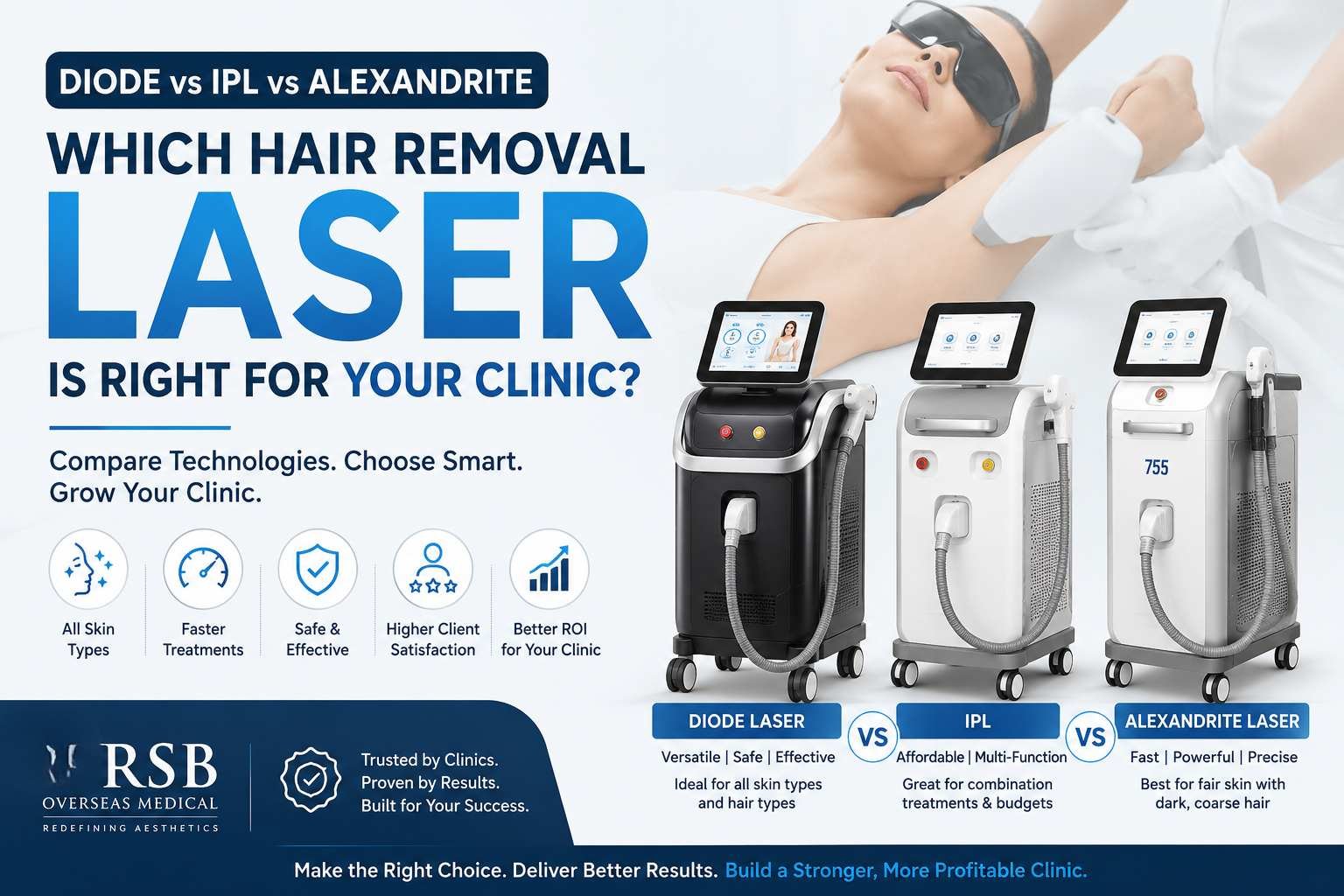
Diode vs IPL vs Alexandrite: Which Hair Removal Laser Is Right for Your Clinic?
Choosing a hair removal laser machine isn't just about picking the most powerful option on the price list. Diode, IPL, and Alexandrite systems each work differently, suit different client profiles, and affect your clinic's session times, comfort scores, and repeat-booking rates in different ways. Here's a clear, practical comparison to help you decide.
How Each Technology Actually Works
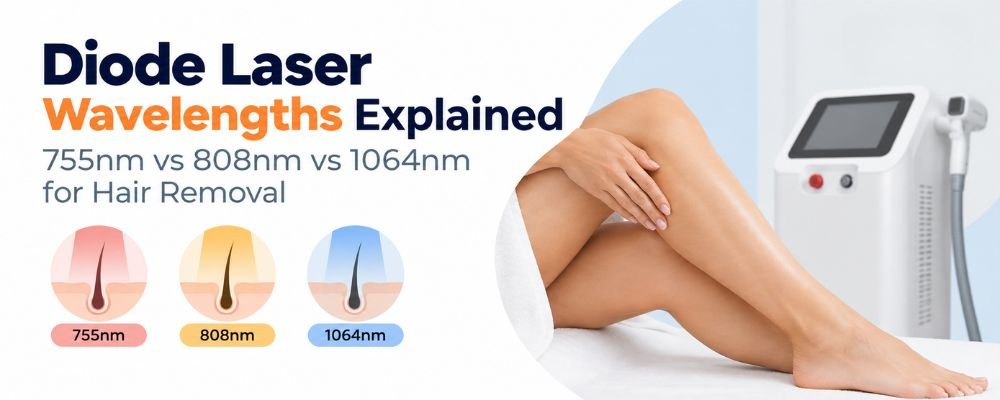
Diode laser emits a single, concentrated wavelength (commonly 808nm, or multi-wavelength systems combining 755+808+940+1064nm) that targets melanin in the hair follicle with high precision. The focused wavelength penetrates consistently regardless of ambient light, which is why diode is considered the clinical gold standard for permanent hair reduction.
IPL (Intense Pulsed Light) isn't technically a laser — it uses broad-spectrum light across multiple wavelengths at once. This makes it more affordable and versatile for combination treatments (pigmentation, skin rejuvenation) but less precise for hair follicle targeting than a true laser.
Alexandrite laser operates at 755nm, the shortest wavelength of the three. It's fast and highly effective on lighter skin with dark, coarse hair, but its shorter wavelength is absorbed more by melanin in the skin itself — meaning it carries a higher risk profile on darker or tanned skin.
Side-by-Side Comparison
| Factor | Diode Laser | IPL | Alexandrite Laser |
|---|---|---|---|
| Best skin types | All types (I–VI), especially with multi-wavelength systems | Fair to medium skin | Fair to light-medium skin |
| Best hair types | Coarse to fine hair | Coarse, dark hair only | Dark, coarse hair |
| Treatment speed | Fast, especially with large spot sizes | Moderate | Fastest of the three |
| Client comfort | High, especially with dual-cooling systems | Moderate | Moderate to low without cooling |
| Risk on darker/tanned skin | Low with correct wavelength selection | Higher risk of burns/pigmentation | Higher risk — not recommended |
| Sessions needed for results | 6-8 typically | 8-10+ | 6-8 |
| Running cost per session | Low to moderate | Low | Moderate (consumables/cooling) |
| Clinical positioning | Premium, all-skin-type clinics | Budget multi-service clinics | Fair-skin specialist clinics |
Which One Should Your Clinic Invest In?
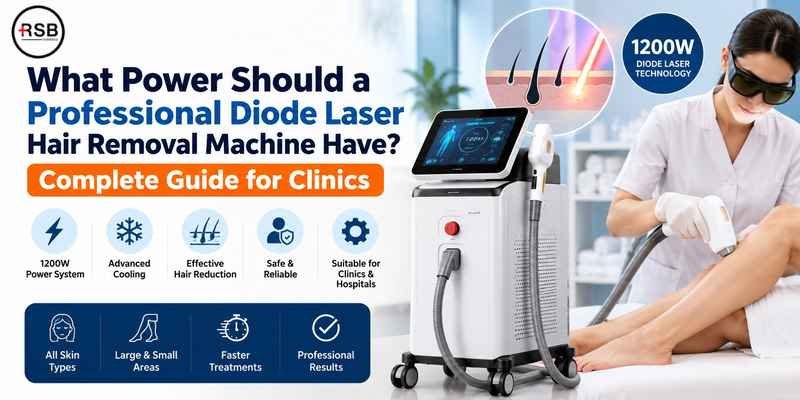
Choose diode if: you treat a broad range of skin tones and hair types, want the lowest long-term risk profile, and are building a reputation for safe, consistent results. This is why diode systems — such as the 1200W Diode Laser Hair Removal Machine or multi-wavelength platforms like the ADSS Diode Laser — dominate premium and high-volume clinics today.
Choose IPL if: your clinic serves mostly fair-skinned clients and you want one machine that can also handle light skin rejuvenation or pigmentation work alongside hair removal, and budget is the primary constraint.
Choose Alexandrite if: you specialize in a fair-skinned clientele with coarse dark hair and speed is your top priority — but be prepared to turn away or refer out clients with darker or tanned skin.
For most clinics serving a mixed clientele — which is the majority of Indian salons and skin clinics — diode remains the safer, more versatile long-term investment. It's the reason diode has become the default recommendation across our hair removal laser machine range, including systems like the DEPI MAX, which combines a wide wavelength range with dual cooling for exactly this kind of diverse client base.
A Quick Decision Checklist
- What skin tones make up most of your client base?
- Do you need one machine that also supports other treatments, or a dedicated hair removal system?
- Is client comfort (and therefore retention) more important to you than raw treatment speed?
- What's your realistic monthly client volume, and does the machine's session speed match it?
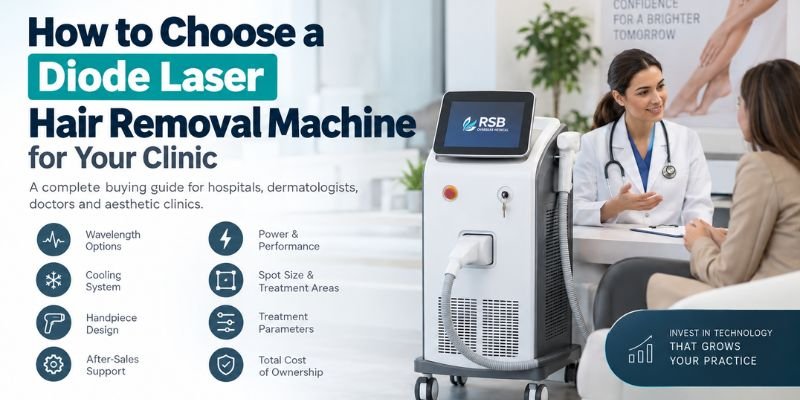
- What warranty and service support comes with the machine you're considering?
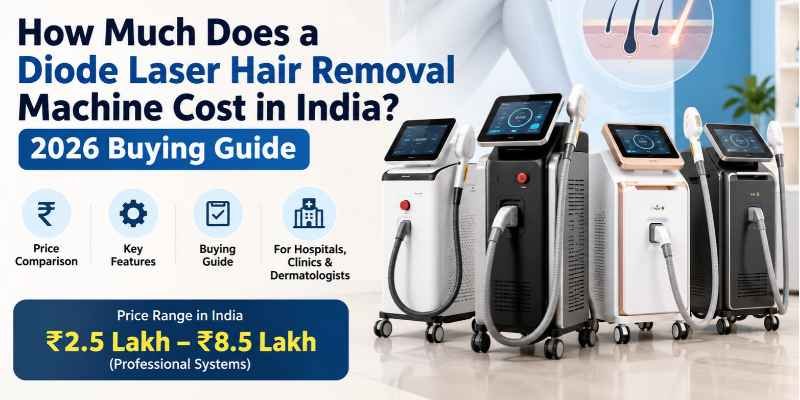
If you're weighing the numbers side by side, our price guide for hair removal laser machines in India breaks down what drives cost across these categories.
Not sure which system fits your clinic? Talk to our team — we'll walk you through the right configuration based on your client base and budget, not just the spec sheet.
Why Clinics Choose RSB Overseas Medical
- More than 10 years of industry expertise
- Installation support across India
- Product training for clinic staff
- Warranty and after-sales service
- Technical assistance
- Fast spare parts availability
Which Machine Offers Better ROI?
Although a diode laser machine has a higher initial investment than IPL, it usually provides better long-term returns because it:
- Treats more patients daily.
- Requires fewer sessions.
- Supports almost all skin types.
- Increases repeat business.
- Generates higher revenue per month.
For most Indian dermatology clinics, a multi-wavelength diode laser offers the best balance of performance, safety, and profitability.
FAQs:
Q1. Is diode laser better than IPL for hair removal?
For dedicated hair removal, yes — diode delivers more consistent, longer-lasting results across a wider range of skin and hair types. IPL can be a reasonable choice if you want one machine for multiple light-based treatments on a budget.
Q2. Can Alexandrite lasers be used on dark skin?
It's not recommended. The shorter 755nm wavelength is absorbed more by melanin in the skin, increasing the risk of burns or pigmentation changes on darker or tanned skin. Diode is the safer choice for mixed or darker skin tones.
Q3. How many sessions does each technology typically need?
Diode and Alexandrite generally need 6-8 sessions for visible long-term reduction; IPL often needs 8-10 or more due to its lower precision.
Q4. Which machine offers the best ROI for a new clinic?
A multi-wavelength diode system usually offers the best long-term ROI, since it can safely serve the widest range of clients without turning anyone away — reducing lost bookings and building a broader referral base.