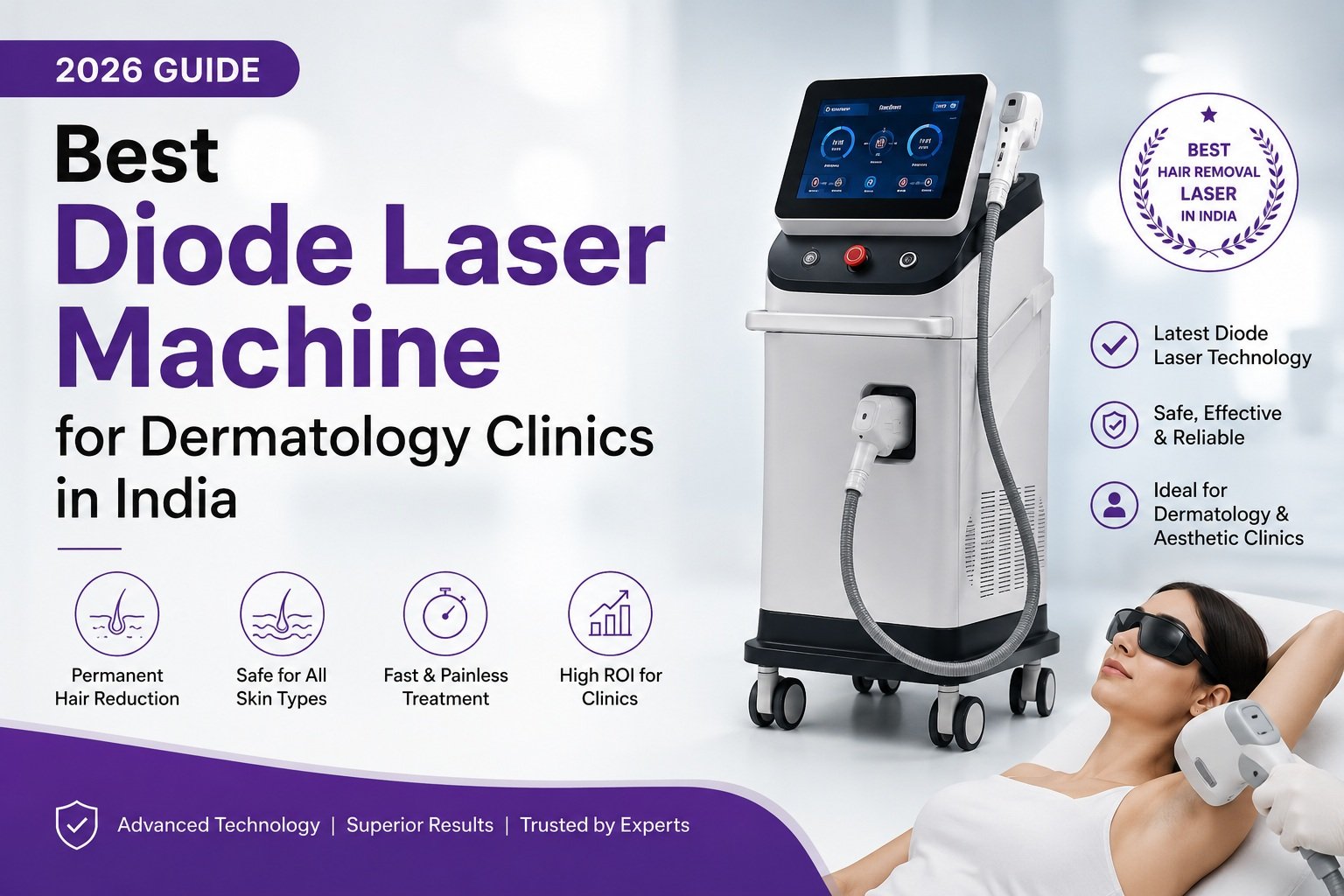
Best Diode Laser Machine for Dermatology Clinics in India (2026 Guide)
Running a dermatology clinic in India means making smart equipment decisions — ones that affect patient outcomes, staff workflows, and your bottom line. If you're evaluating laser technology right now, one question keeps coming up: which diode laser machine for clinic use actually delivers consistent results on Indian skin tones?
This guide answers exactly that. You'll learn what to look for in a diode laser system in 2026, why skin type considerations matter more in India than elsewhere, and how the right machine can meaningfully grow your practice.
Why Diode Laser Technology Leads in 2026
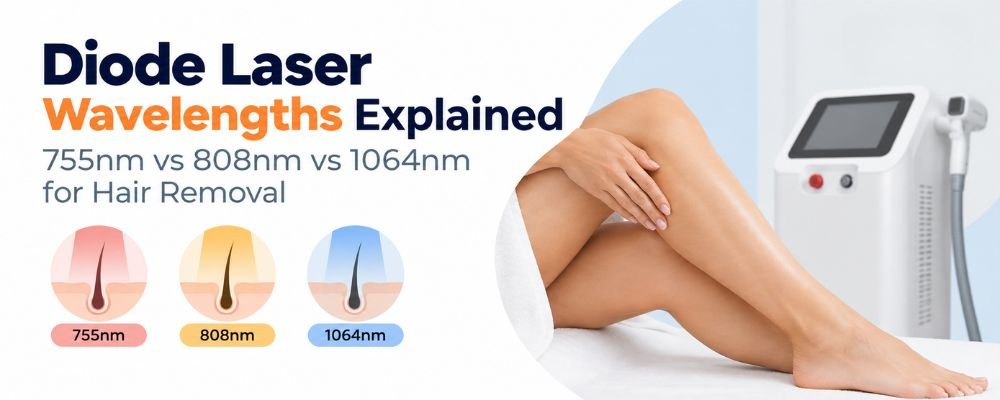
Diode lasers have become the gold standard for hair removal and several other dermatological procedures — and for good reason. They offer a wavelength range (typically 808nm, 755nm, or 940nm) that targets melanin effectively while sparing surrounding tissue.
For Indian clinics specifically, this matters. Your patient base spans a wide range of Fitzpatrick skin types — from Type III to Type VI — and not every laser platform handles this well. Diode technology, when properly configured, adapts to darker skin safely.
The result: fewer adverse events, higher patient satisfaction, and stronger word-of-mouth for your clinic.
Key Factors to Evaluate Before You Buy
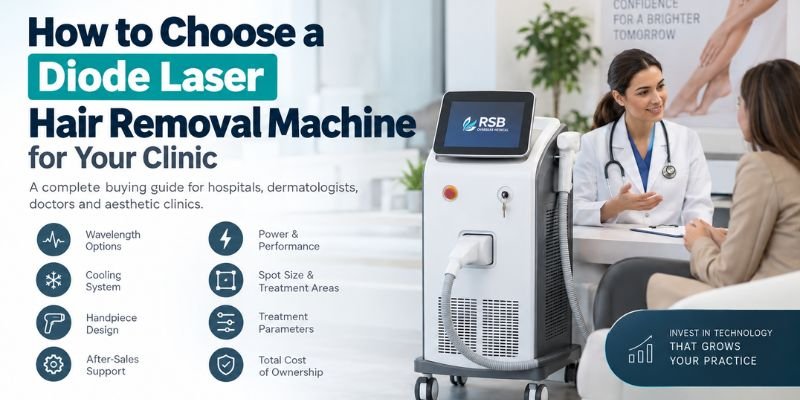
Choosing the best hair removal laser India clinics can rely on isn't just about brand name or price tag. Here's what experienced clinic owners and dermatologists consistently weigh before signing a purchase order.
1. Wavelength and Combination Options
Single-wavelength machines work — but combination platforms (755nm + 808nm + 1064nm) give you more versatility across skin types and hair colors. If you see a diverse patient population, a triple-wavelength system reduces the need for multiple devices.
Takeaway: Look for machines offering at least 808nm as the primary wavelength, with optional combinations for broader clinical application.
2. Fluence Range and Pulse Duration Control
These two parameters determine how safely and effectively the laser interacts with the target tissue. A wider fluence range (measured in J/cm²) lets you treat both fine facial hair and coarse body hair on the same device.
Pulse duration control is equally critical. Longer pulses distribute heat more gradually — essential when treating darker Fitzpatrick types without risking post-inflammatory hyperpigmentation (PIH).
3. Cooling System Quality
Inadequate cooling is one of the top reasons patients experience discomfort or adverse skin reactions. Look for built-in contact cooling or advanced cryo-cooling mechanisms integrated directly into the handpiece.
The best diode laser machines maintain consistent cooling throughout high-volume treatment sessions — not just during the first few patients of the day.
4. Spot Size and Repetition Rate
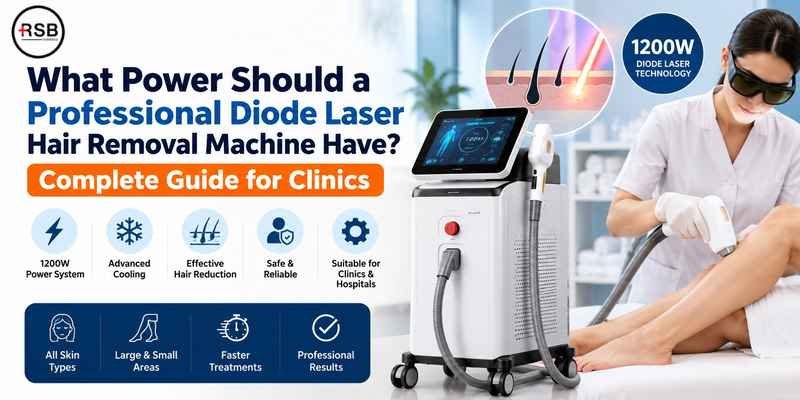
Larger spot sizes (18mm x 18mm or greater) mean faster treatment times, which directly impacts how many patients you can see per day. A high repetition rate (measured in Hz) further speeds up sessions.
For a busy clinic, this translates into real revenue impact — more sessions per hour without compromising safety.
Indian Skin Types: Why This Changes Everything
India's patient population is predominantly Fitzpatrick Type III–VI. This isn't a minor technical footnote — it's the central clinical challenge for any diode laser machine for clinic use in this market.
Fitzpatrick Type Considerations
- Type III–IV: Generally, responds well to 808nm with moderate fluence settings. Risk of PIH is manageable with proper cooling and correct pulse duration.
- Type V–VI: Requires longer pulse durations, lower fluence, and superior cooling. The 1064nm Nd:YAG is sometimes preferred for very dark skin, but advanced diode systems with proper settings can handle this range too.
The practical implication: your machine must offer granular control over all key parameters, and your clinical team needs training to use those controls correctly. Don't buy a machine and rely on a single preset program for all patients.
Seasonal and Hormonal Factors
Indian patients also present unique treatment patterns driven by seasonal tanning and hormonal conditions like PCOS — which drives high demand for hair removal in women. A diode laser with reliable settings for tanned skin gives you clinical flexibility year-round.
ROI and Practice Growth: The Business Case
Upgrading to a professional diode laser system is a significant investment. Here's why it pays off faster than many clinic owners expect.
High-Demand Procedure Volume
Laser hair removal consistently ranks among the most requested aesthetic procedures in India. A reliable machine lets you build a recurring patient base — most full-body hair removal protocols require 6–8 sessions, giving you predictable appointment cycles.
Treatment Versatility
Many diode platforms extend beyond hair removal into photo rejuvenation, vascular lesion treatment, and skin toning. This means a single capital investment can support multiple revenue streams in your clinic.
Patient Retention and Referrals
Consistent results on Indian skin tones build trust quickly. Patients who see visible reduction after the first two or three sessions come back — and refer others. A machine that underperforms or causes adverse reactions does the opposite.
Here's the key takeaway: Your laser machine isn't just a piece of equipment. It's a long-term revenue asset and a driver of your clinic's reputation.
Buyer's Checklist: 8 Questions to Ask Before Purchase
Use this checklist when evaluating any diode laser system for your clinic:
- Does the machine offer 808nm wavelength as a baseline, with optional combination wavelengths?
- Can you adjust fluence, pulse duration, and repetition rate independently?
- What is the integrated cooling mechanism, and how does it perform over extended sessions?
- What spot size options are available, and what is the maximum treatment speed?
- Is the machine CE-certified or cleared by a recognized regulatory body?
- Does the supplier offer clinical training and ongoing technical support in India?
- What is the warranty coverage, and are spare parts available domestically?
- Does the supplier have documented experience serving dermatology clinics across India?
If a supplier can't answer most of these clearly, that itself is useful information.
Safety, Compliance, and Technical Support in India
Regulatory and after-sales considerations often get underweighted during the buying process — until something goes wrong.
When sourcing a diode laser machine for clinic use in India, confirm that the device meets international safety standards (CE marking or equivalent). Equally important is whether your supplier maintains a service network within India for routine maintenance and emergency repairs.
Downtime is expensive. A machine sitting idle for two weeks waiting on imported parts directly impacts your patient schedule and revenue.
Choose suppliers with in-country technical teams, documented service agreements, and a track record of supporting clinical environments — not just selling to them.
What Makes the Best Hair Removal Laser in India
The best hair removal laser India dermatologists trust in 2026 isn't necessarily the flashiest or the most expensive. It's the one that:
- Handles the full spectrum of Indian skin types safely
- Delivers consistent results across a high volume of sessions
- Comes backed by reliable clinical support and service infrastructure
- Fits your clinic's treatment mix and patient demographics
Technology has matured enough that the differentiators now sit less in raw performance specs and more in the quality of support, training, and long-term partnership your supplier provides.
Choosing the right diode laser machine is one of the highest-leverage decisions you'll make for your dermatology clinic. The right system improves patient outcomes, builds your reputation, and creates a sustainable revenue stream through high-demand aesthetic procedures.
For Indian clinics, the selection criteria are clear: prioritize wavelength flexibility, parameter control, cooling quality, and skin-type adaptability — then find a supplier who supports you long after the sale.
RSB Overseas Medical supplies professional-grade diode laser systems to dermatology and aesthetic clinics across India. If you're ready to evaluate options that fit your clinic's needs and patient profile, contact the RSB Overseas Medical team to discuss the right solution for your practice.