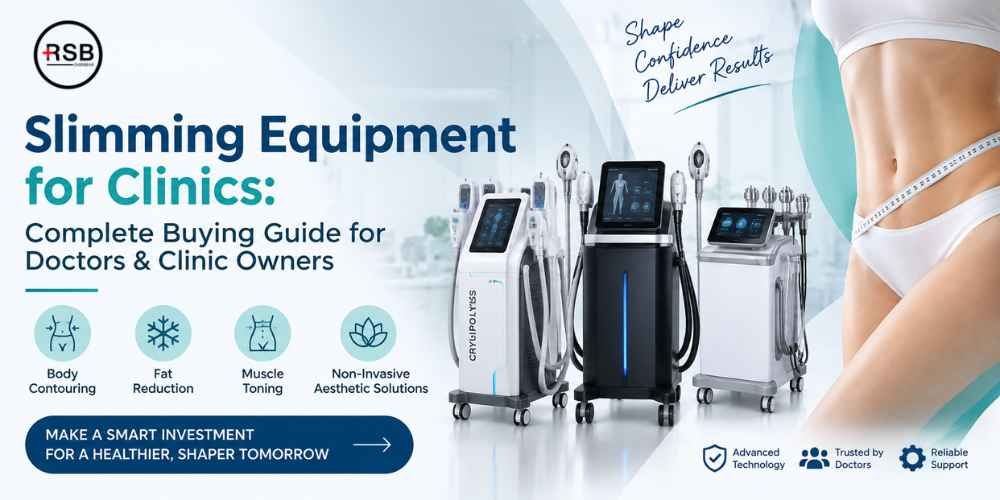
Slimming Equipment for Clinics: Complete Buying Guide for Doctors & Clinic Owners
Choosing the right slimming equipment for a clinic is not simply about selecting the machine with the highest power or the lowest price. Doctors, dermatologists, aesthetic physicians, hospitals and clinic owners need to consider the technology, treatment objective, patient profile, safety features, workflow, maintenance, regulatory documentation and after-sales support before investing.
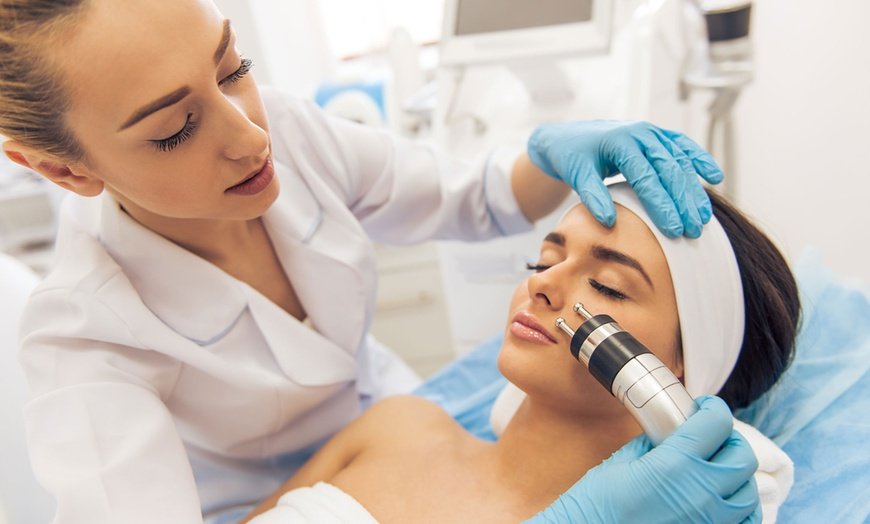
Modern body-contouring equipment includes technologies such as cryolipolysis, radiofrequency (RF), ultrasound/cavitation and EMS-based body-sculpting systems. Each technology is designed for different applications, so selecting the right equipment starts with understanding what your clinic wants to offer.
It is also important to distinguish body contouring from medical weight management. Non-invasive body-contouring technologies are generally intended for localized body shaping, fat reduction, circumference reduction, muscle stimulation or related aesthetic applications rather than treating obesity or replacing a healthy lifestyle.
For clinics planning to introduce or expand body-contouring services, the right equipment should support both clinical requirements and long-term business objectives.
Quick Answer: What Is the Best Slimming Equipment for a Clinic?
There is no single best slimming machine for every clinic.
The appropriate equipment depends on the treatment services you want to provide:
| Clinic Requirement | Technology to Consider | Typical Application |
|---|---|---|
| Localized fat reduction | Cryolipolysis | Targeted fat reduction and body contouring |
| Body contouring and selected skin applications | RF | Tissue heating and body-contouring applications |
| Non-invasive body shaping | Ultrasound/Cavitation | Body-contouring applications |
| Muscle toning and sculpting | EMS/EM-type systems | Muscle stimulation and body sculpting |
| Multiple treatment objectives | Combination systems | Multiple body-contouring applications |
The most important principle is simple:
Choose the treatment objective first, then choose the technology.
Why Are Clinics Investing in Slimming and Body-Contouring Equipment?
Body-contouring services can provide an additional treatment option for dermatology clinics, aesthetic centres, wellness facilities and hospitals.
Patients may seek professional body-contouring services for reasons such as:
- Localized fat deposits
- Body-shape improvement
- Non-surgical aesthetic treatments
- Muscle toning
- Body sculpting
- Appearance of cellulite
- Areas that remain resistant to lifestyle changes
- Expansion of an existing aesthetic treatment portfolio
For healthcare professionals, patient selection and realistic expectations are essential.
A professional treatment approach should follow:
Patient assessment → appropriate technology → treatment protocol → monitoring → follow-up
Body-contouring equipment should not be marketed as a substitute for medical weight-loss treatment.
Major Types of Slimming Equipment for Clinics
1 - Cryolipolysis Machines : Cryolipolysis is commonly known as fat freezing. It uses controlled cooling to target fat tissue in selected areas of the body. This technology is commonly considered for localized fat reduction and body-contouring services.
Potential clinic applications include:
- Abdomen
- Flanks
- Love handles
- Selected thigh areas
- Other appropriate localized fat areas
Cryolipolysis can be particularly attractive to clinics that want to provide non-surgical localized body-contouring treatments. RSB Overseas offers professional Cryolipolysis Slimming Machines for clinics and aesthetic applications. Explore the Cryolipolysis Slimming Machine range to compare available equipment.
Important Considerations : Before purchasing a cryolipolysis system, evaluate:
- Applicator design
- Cooling control
- Temperature monitoring
- Treatment area
- Safety systems
- Treatment parameters
- Warranty
- Operator training
- After-sales service
2 - RF-Based Slimming and Body-Contouring Equipment : Radiofrequency technology uses electromagnetic energy to heat tissue. Depending on the specific device, RF systems can be incorporated into body-contouring and skin-related aesthetic treatments. For clinics, the important question is not simply whether a machine contains RF technology.
Instead, ask:
What is the specific RF system designed and intended to do?
Evaluate the manufacturer’s technical documentation, treatment protocols, operating parameters and safety instructions before purchasing.
Combination systems can also be useful for clinics that want to offer multiple treatment modalities.
RSB Overseas provides combination body-contouring equipment, including RF and cryolipolysis systems.
You can explore the RF Double Cryolipolysis Machine category for professional equipment options.
3 - Ultrasonic Cavitation Machines : Ultrasonic cavitation equipment is another technology commonly considered by aesthetic clinics and slimming centres. These systems use ultrasonic energy and may be incorporated into body-contouring platforms alongside technologies such as RF or vacuum.
Depending on the specific machine, applications may include:
- Body contouring
- Localized body-shaping treatments
- Selected aesthetic treatments
- Multi-modality treatment protocols
RSB Overseas offers professional cavitation systems designed for body-contouring applications. Explore the Cavitation Slimming Machine range for available options.
What to Check Before Buying
Consider:
- Ultrasound frequency
- Power output
- Handpiece design
- Treatment modes
- Safety controls
- Display and controls
- Treatment area
- Warranty
- Training
- Maintenance requirements
4 - EMS and Body-Sculpting Equipment : Not every patient is looking primarily for localized fat reduction. Some patients are more interested in muscle stimulation, muscle toning and body sculpting. EMS-based body-sculpting systems are therefore another category worth considering.
RSB Overseas offers the ADSS EMS Body Sculpt Machine for professional body-sculpting applications. Explore the ADSS EMS Body Sculpt Machine to learn more about this type of equipment.
When comparing EMS equipment, evaluate:
- Treatment applicators
- Energy output
- Treatment modes
- Treatment duration
- Patient comfort
- Safety controls
- Contraindications
- Operator controls
- Manufacturer support
5 - Combination Slimming Machines : Combination machines can be attractive to clinics that want to provide multiple body-contouring services. Depending on the model, a combination system may incorporate technologies such as:
- Cryolipolysis
- RF
- Cavitation
- Vacuum
- EMS
- Other aesthetic technologies
The major advantage is flexibility. A clinic may be able to provide different treatment protocols without purchasing a completely separate machine for every application.
However, more functions do not automatically mean better value.
Before buying a multifunction slimming machine, ask:
- Which functions will your clinic actually use?
- Are the technologies properly documented?
- Are treatment parameters adjustable?
- Is operator training included?
- Are replacement handpieces available?
- What happens if one module fails?
- Is technical service available?
- What is the warranty?
- What are the maintenance requirements?
- Does the machine fit your treatment workflow?
How to Choose Slimming Equipment for a Dermatology Clinic
Dermatologists should evaluate slimming and body-contouring equipment from both a clinical and operational perspective.
Step 1: Define the Treatment Objective
First determine what services you want to provide.
For example:
- Localized fat reduction
- Body contouring
- Muscle stimulation
- Body sculpting
- Cellulite-related aesthetic treatments
- Skin-related applications
- Combination treatments
The answer will determine which technologies deserve consideration.
Step 2: Understand Your Patient Profile
Consider:
- Typical patient demographics
- Most requested treatment areas
- Existing aesthetic procedures
- Patient expectations
- Number of expected treatments
- Treatment-room availability
- Existing equipment
Step 3: Compare Technical Specifications
Do not select equipment based only on terms such as “advanced,” “latest” or “professional.”
Compare:
- Energy technology
- Frequency
- Power
- Applicators
- Treatment modes
- Cooling/heating controls
- Safety sensors
- Emergency stop
- Display system
- Treatment presets
- Maintenance requirements
What Should Doctors Check Before Buying a Slimming Machine?
A professional purchasing decision should include the following criteria.
1. Intended Use : Understand exactly what the manufacturer states the equipment is designed to do.
2. Regulatory Documentation : Verify the regulatory and product documentation applicable to the specific device and its intended use. For equipment being purchased in India, clinics should understand the applicable requirements under the country’s medical-device regulatory framework.
3. Safety Features : Look for appropriate safety features such as:
- Temperature monitoring
- Contact monitoring
- Emergency stop
- Automatic shutdown
- Controlled energy delivery
- Applicator safety mechanisms
The exact features will depend on the technology.
4. Operator Training
Ask whether the supplier provides:
- Installation
- Demonstration
- Operator training
- Treatment protocol guidance
- Troubleshooting assistance
5. Warranty
Review:
- Warranty period
- Covered components
- Handpiece coverage
- Service conditions
- Replacement policy
6. After-Sales Service
Technical support can have a significant impact on clinic operations.
Ask the supplier:
How quickly can technical support be provided if the machine develops a problem?
7. Spare Parts
Confirm the availability of:
- Handpieces
- Applicators
- Cables
- Consumable components
- Replacement parts
8. Electrical Requirements
Check:
- Voltage
- Frequency
- Power consumption
- Earthing requirements
- Installation requirements
9. Treatment Workflow : Determine how easily the equipment can be incorporated into your daily appointment schedule.
10. Total Cost of Ownership : The purchase price is only one part of the investment.
Consider:
Equipment cost + installation + training + maintenance + consumables + service + downtime
Price vs ROI: How Clinic Owners Should Evaluate Slimming Equipment
The lowest-priced slimming machine is not necessarily the best investment.
A lower-cost machine may have:
- Limited service support
- Fewer treatment options
- Higher maintenance requirements
- Limited documentation
- Longer downtime
A higher-quality professional system may provide:
- Better equipment construction
- Multiple applicators
- Stronger technical support
- Better workflow
- Training
- Warranty
- More treatment flexibility
A basic ROI calculation can help clinic owners evaluate the investment.
Monthly Treatment Revenue
Average treatment price × Number of paid sessions = Monthly treatment revenue
Then estimate:
Monthly contribution = Treatment revenue − consumables − allocated operating costs
Approximate payback:
Equipment investment ÷ monthly contribution = Estimated payback period
These calculations are estimates and should be based on the clinic’s actual patient volume, pricing and operating costs.
What Is a Good Starter Slimming Machine for a Small Clinic?
A new clinic does not necessarily need the largest or most expensive system.
The better approach is to select equipment based on the services you can realistically sell and operate.
Localized Fat-Reduction Focus : Consider cryolipolysis when localized fat reduction and body contouring are central to the planned service.
Multi-Service Aesthetic Clinic : A combination platform may be appropriate if your clinic already has sufficient demand for multiple body-contouring modalities.
Muscle-Sculpting Focus : EMS or electromagnetic muscle-stimulation equipment may be considered when muscle stimulation and body sculpting are important parts of your treatment offering.
Budget-Conscious Professional Setup : A clinic can begin with a professionally appropriate system and expand its equipment portfolio as patient demand grows.
How Hospitals Should Evaluate Slimming Equipment
Hospitals and larger medical centres should use a structured procurement process. In addition to clinical requirements, evaluate:
- Vendor credentials
- Technical specifications
- Regulatory documentation
- Warranty
- Service-level agreements
- Installation
- Preventive maintenance
- Calibration requirements where applicable
- Operator training
- Electrical safety
- Spare-parts availability
- Procurement requirements
Hospitals should also define who is authorized and trained to operate the equipment.
The purchasing decision should be based on technical and clinical requirements rather than the sales brochure alone.
Why Manufacturer and Supplier Support Matters
Buying a slimming machine is only the beginning of the equipment lifecycle.
A professional supplier should support the clinic before, during and after installation.
Before Purchase
- Product consultation
- Technology comparison
- Product demonstration
- Technical specifications
- Documentation
- Commercial quotation
During Installation
- Delivery
- Installation
- Equipment setup
- Operator training
After Purchase
- Technical support
- Maintenance
- Spare parts
- Troubleshooting
- Warranty support
- Additional training
For clinics investing in body-contouring equipment for the first time, supplier support can significantly reduce operational risk.
Questions to Ask a Slimming Equipment Manufacturer / Supplier
Before placing an order, ask these questions:
- What technology does the machine use?
- What is its intended application?
- Which treatment areas can be addressed?
- What are the contraindications?
- What safety systems are included?
- What product and regulatory documentation is available?
- What is the warranty period?
- Are spare parts available in India?
- Is installation included?
- Is operator training included?
- What maintenance is required?
- What is the power consumption?
- How much space is required?
- What is the after-sales response process?
- Can I review the technical documentation before purchasing?
A supplier that provides clear answers to these questions is easier to evaluate than one focused only on the initial purchase price.
Why Choose a Professional Medical Equipment Supplier?
The body-contouring equipment market includes machines with significantly different technologies, specifications, intended uses and support levels.
A professional medical-equipment supplier should help clinics understand the differences between technologies and select equipment according to their actual requirements.
RSB Overseas provides a range of professional slimming and body-contouring equipment, including:
- Cryolipolysis machines
- Cavitation slimming machines
- EMS body-sculpting equipment
- RF-based equipment
- Combination body-contouring systems
You can explore the complete Slimming Equipment range to compare available equipment for professional applications.
Choosing the Right Slimming Equipment for Your Clinic
The best slimming equipment for a clinic is not necessarily the most powerful or most expensive machine. The right choice should match your:
Clinical objective + patient profile + treatment workflow + safety requirements + regulatory documentation + budget + after-sales support.
Dermatologists, doctors, hospitals and clinic owners should first determine whether their primary service will focus on localized fat reduction, body contouring, muscle stimulation or a combination of treatments.
From there, compare cryolipolysis, RF, cavitation, EMS and combination technologies according to technical specifications, intended use, safety requirements and supplier support. For clinics in India, after-sales service and availability of technical support are also important parts of the purchasing decision.
If you are planning to introduce or expand body-contouring services, explore the Slimming Equipment range from RSB Overseas to compare professional equipment options for clinics, aesthetic centres and healthcare facilities.
FAQ:
Question: What is the best slimming equipment for a clinic?
Answer: There is no single best machine for every clinic. The appropriate equipment depends on whether the clinic wants to focus on localized fat reduction, body contouring, muscle stimulation, body sculpting or multiple treatment modalities.
Question: Is slimming equipment the same as weight-loss equipment?
Answer: No. Body-contouring equipment is generally designed for localized body shaping, fat reduction, muscle stimulation or related aesthetic applications. It should not automatically be considered a treatment for obesity or generalized weight loss.
Question: Which slimming machine is best for dermatologists?
Answer: Dermatologists should select equipment based on their patient population, treatment objectives, technology, safety profile, documentation, workflow and supplier support. Cryolipolysis, RF, cavitation and EMS systems serve different purposes.
Question: Is cryolipolysis suitable for clinics?
Answer: Cryolipolysis can be considered by clinics offering localized fat-reduction and body-contouring services. Appropriate patient selection, device-specific indications and safety protocols should always be followed.
Question: Is RF useful for body contouring?
Answer: Certain RF technologies are used in body-contouring applications. The exact application depends on the specific device, its intended use and manufacturer instructions.
Question: How much does slimming equipment cost in India?
Answer: The price varies depending on technology, configuration, number of applicators, specifications, brand, warranty, documentation and after-sales support. Professional systems can range from single-function machines to advanced combination platforms.
Question: What should I check before buying a slimming machine?
Answer: Check the technology, intended use, technical specifications, safety features, regulatory documentation, warranty, training, installation, spare parts, after-sales service, maintenance requirements and total cost of ownership.
Question: Can hospitals use slimming equipment?
Answer: Hospitals and medical centres can evaluate body-contouring equipment for appropriate clinical services, subject to the device’s intended use, applicable regulatory requirements, trained personnel and institutional safety procedures.
Question: Does non-invasive mean completely risk-free?
Answer: No. Non-invasive procedures do not involve surgical incisions, but they can still have risks and adverse effects. Patient assessment, appropriate treatment protocols and qualified operation are important.
Question: How can I compare two slimming machines?
Answer: Compare them using the same criteria: technology, intended application, treatment areas, energy parameters, applicators, safety systems, documentation, warranty, service support, maintenance and operating costs.